


The Jewel of the Mekong
Why Laos
More than a destination, it’s a journey into tranquility! Laos offers a serene blend of ancient spirituality, untouched nature, and a gentle, welcoming culture, creating a unique setting for profound learning.
Our programs immerse students in authentic experiences, from witnessing the sacred alms-giving ceremony to exploring cascading waterfalls and engaging with riverside communities. Every moment in this timeless land is designed to inspire reflection, foster empathy, and build a deep connection to a more peaceful way of life.
Laos at a Glance: Country Essentials
Everything you need before you start planning — geography, money, plugs and time.
- Where it sits: Landlocked at the centre of the Indochinese peninsula, bordered by China and Myanmar to the northwest, Vietnam to the east, Cambodia to the south and Thailand to the west. The only country in the region with no coastline.
- Land area: 236,800 km² — larger than Cambodia, with a fraction of the population and far more mountain.
- Population: Around 7.8 million, the smallest in mainland Southeast Asia, across roughly 50 officially recognised ethnic groups.
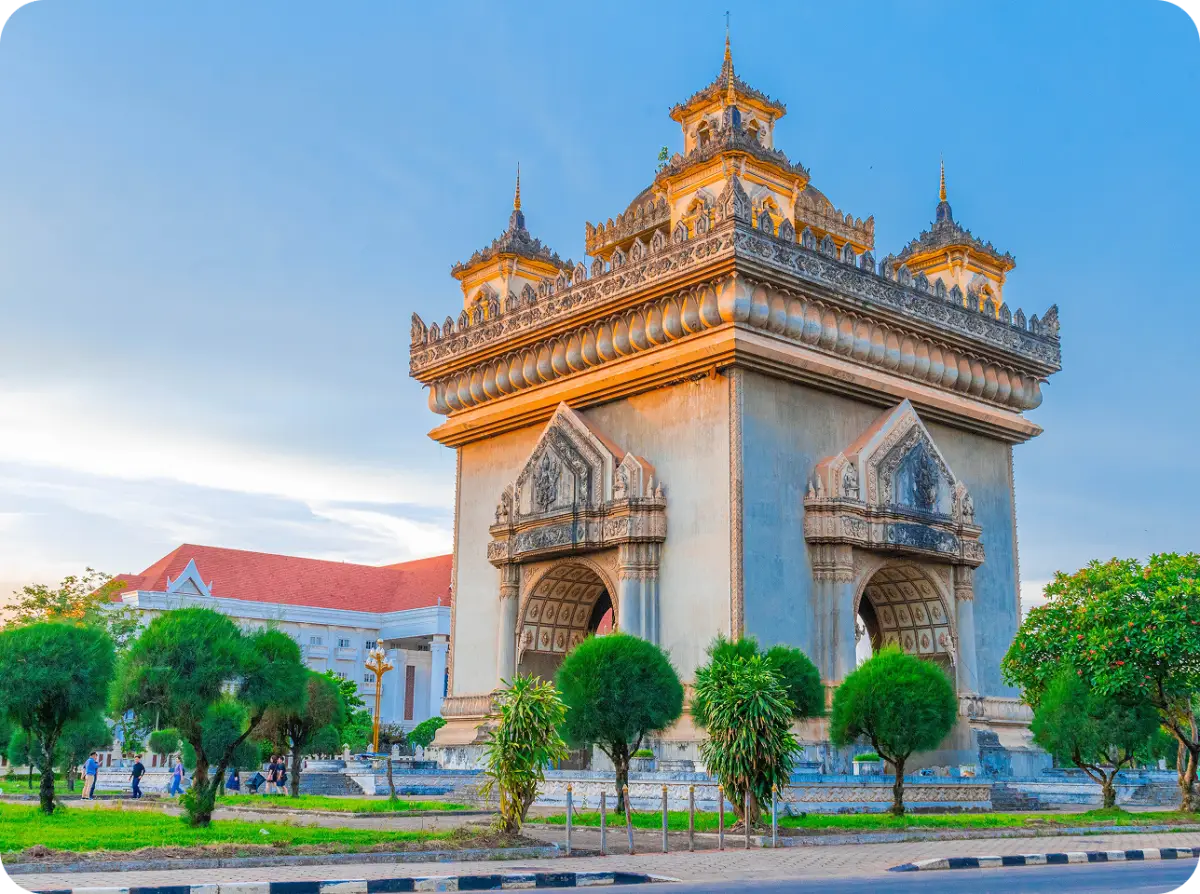
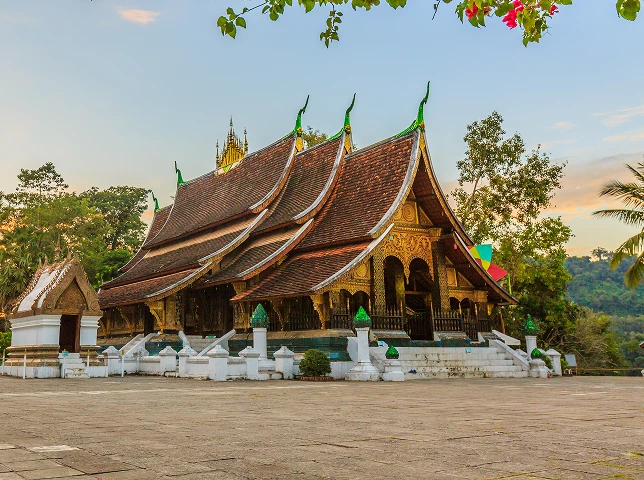
- Capital city: Vientiane. Luang Prabang, a UNESCO World Heritage city, is the main cultural destination.
- Time zone: UTC+7 year-round, matching Vietnam, Cambodia and Thailand.
- Faith: Theravada Buddhism is dominant and highly visible in daily life, alongside widespread animist belief among highland communities.
- Official language: Lao, a tonal language closely related to Thai. English is spoken in tourism and in the cities; French persists in some professional settings. Expect limited English in rural areas.
- Money: The Lao Kip (LAK). See the currency note below — Laos works differently from its neighbours.
- Power supply: 230V, 50Hz, with types A, B, C, E and F all in use. Type F is most common. A universal adapter is the simplest answer.
- E-cigarettes are illegal: Vapes are banned in Laos, and using one in public can result in a fine. They are also prohibited on the Laos–China Railway. Worth stating plainly in your pre-departure brief for older student groups.
A word on currency
The Kip is a closed currency: hard to obtain outside Laos, and illegal to take out when you leave. Bring US dollars to exchange on arrival, or withdraw from ATMs, which dispense Kip only. Damaged notes are usually refused. Paying in Kip is expected, and technically required — though dollars are widely accepted in tourist areas, with change given in Kip at the vendor’s own rate.
Information current as of 2026
Entry Requirements: Visas & Pre-Arrival Formalities
Most visitors need a visa, and every traveller now needs a digital immigration form. Both are straightforward with a little lead time.
Lao Digital Immigration Form — required for everyone
All foreign travellers must complete the LDIF online, both before arrival and again before departure. It replaces the old paper card, and submission produces a QR code that is scanned at the checkpoint. File it within three days of travelling in each direction. Submit through the official immigration portal only.
Do you need a visa?
- Visa-free entry: Available to ASEAN nationals and to passport holders from a short list of other countries including Japan, South Korea, Russia, Mongolia, Luxembourg and Switzerland.
- Visa on arrival — around USD 40: Available to most nationalities at international airports and most land crossings. Bring a passport photo and small US dollar notes; processing usually takes 30–40 minutes. Workable for individuals, slow for a large group.
- e-Visa — around USD 50: Applied for online, roughly three working days to process, valid at a defined list of eight entry points. Our recommendation for groups — it removes the arrival-hall queue entirely.
- Embassy in advance: Required for nationalities excluded from visa on arrival and e-visa. Allow at least seven working days.
Points to check before you book
- Passports must be valid for at least six months.
- The e-visa entry point is fixed at application — confirm your arrival airport or crossing is on the list before applying.
- A number of nationalities are excluded from both visa on arrival and e-visa and must apply through an embassy. Check every passport in your group early rather than at the airport.
- A standard visa runs 30 days and can be extended twice inside Laos, to a maximum of 90 days.
Getting there: Laos connects easily by air to Bangkok, Hanoi, Ho Chi Minh City, Siem Reap, Seoul and Singapore. The Laos–China Railway also links Vientiane, Vang Vieng and Luang Prabang quickly and comfortably, though tickets can only be booked seven days ahead and require passport copies — we handle that for you.
Entry rules change. Always verify before travel. Information current as of 2026
When to Travel: Climate & Seasons
Laos is landlocked, which spares it the typhoons and coastal storms that shape its neighbours’ weather. There are effectively two seasons, and both work — they simply offer different trips.
Dry Season — November to April
The most popular window. November to February brings warm days, cool evenings and clear skies — ideal for trekking, temple visits and river travel. Pack a jacket for the north, where Luang Prabang, Xieng Khouang and the highlands get genuinely cold after dark. March and April turn hot, and agricultural burning can reduce visibility in the north during those months.
Best for: trekking, comfortable touring, clear mountain views
Green Season — May to October
Rain arrives, typically as a short afternoon downpour rather than continuous drizzle. The landscape turns brilliant green, the waterfalls run at full force — Kuang Si is at its most spectacular — and visitor numbers and rates both drop. Some remote roads become difficult, so northern provinces need building in with care.
Best for: waterfalls at full flow, green rice terraces, fewer crowds, better value
Worth planning around: Pi Mai Lao, the Lao New Year water festival in mid-April, and the That Luang and Light Festivals in the autumn. All are extraordinary for students, though much of the country pauses during Pi Mai.
Weather patterns are indicative. Information current as of 2026
Curious About EduTravel In Laos?
Learn Before You Go
What makes Laos an epic destination for Educational Travel?
Laos rewards attention rather than spectacle. It is the quietest country in the region and the least visited — which means students engage with a place on its own terms instead of moving through a tourism machine.
What students connect with:
- History & Global Studies: Laos is the most heavily bombed country per capita in history. Unexploded ordnance still shapes daily life, and sites like the COPE centre in Vientiane make the long aftermath of conflict impossible to abstract.
- Anthropology & Cultural Studies: Around 50 ethnic groups, many with distinct languages and traditions, concentrated in the northern highlands.
- Sustainable Development: Hydropower, land use and Mekong governance are live national debates. Students see development trade-offs being negotiated in real time.
- Archaeology & the Unexplained: The Plain of Jars — thousands of stone vessels up to 3,000 years old, and still not fully explained.
- Religion & Philosophy: Buddhism is woven into ordinary life here more visibly than anywhere else in the region, from the dawn alms round to the rhythm of the working week.
Add Luang Prabang’s UNESCO-listed old town, the Mekong as a working river, and a national temperament of remarkable gentleness — and you have a destination that slows students down enough to actually notice things.
Are there opportunities for community service or service-learning?
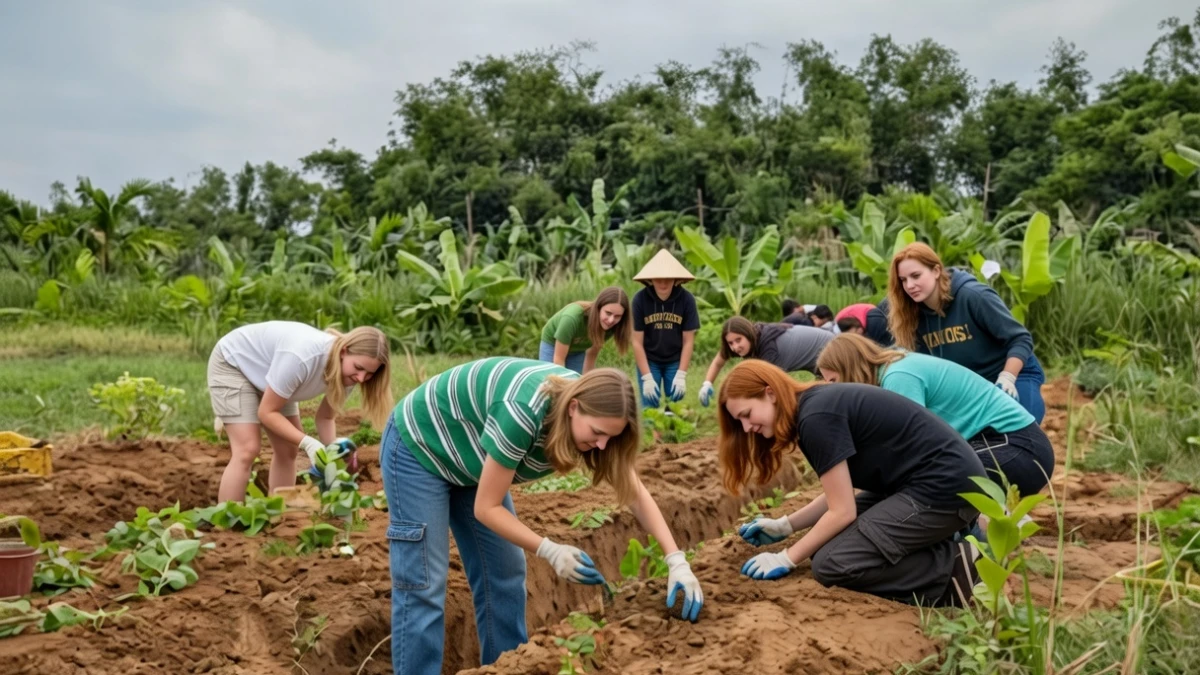
Laos has real development needs and a small, close-knit NGO sector — which makes partnerships easier to build and easier to sustain. Every project we run is co-designed with the community it serves.
- Rural school support: Improving facilities, building learning resources and running English exchange alongside village teachers.
- Clean water & sanitation: Filter systems and hygiene education in villages where access remains limited.
- Conservation & environment: Reforestation, river clean-up and wildlife protection projects, including work with organisations tackling the illegal wildlife trade.
- Community-based tourism: Supporting village-run homestay and guiding initiatives that keep tourism income inside the community.
- UXO awareness & survivor support: Working with organisations on risk education and rehabilitation — among the most affecting projects we run.
How we approach it: we work only with established Lao partners, we do not place students in orphanages or residential care, and no project displaces paid local labour. Students are briefed on why these boundaries exist — understanding why some forms of help cause harm is often the most valuable thing they take home.
How can we interact respectfully with the local culture?
Lao culture prizes calm, modesty and understatement. Groups that match that register are received warmly; groups that don’t stand out immediately.
- Learn a little Lao: “Sabaidee” (sa-bai-dee) for hello, “Khop jai” (kop chai) for thank you. The traditional greeting is the nop — palms together at chin level.
- Dress modestly, everywhere: Not only at temples. Shoulders and knees covered is the norm in public, and swimming is usually done in shorts and a T-shirt rather than swimwear.
- The alms round (Tak Bat): Watch quietly from a distance, no flash, no blocking the procession. Only participate with a guide who can show the correct etiquette. This is the single most commonly disrespected moment in Laos.
- Heads and feet: Never touch anyone’s head. Don’t point your feet at people or religious images, and never rest them on furniture.
- Keep a low profile: Raised voices and visible frustration achieve nothing here and cost real standing. A calm, quiet approach is the Lao way and it works.
- Ask before photographing: Always, and particularly in ethnic minority villages.
- Remove shoes indoors: Before entering a home or a temple chapel — walking the temple grounds in shoes is fine.
Every group travels with a Lao guide who handles the context as it arises — not just what to do, but why.
Is Laos suitable for Healthcare Placement programs?
Yes, for a specific kind of program. Laos is a demanding, low-resource setting — which makes it exceptional for global health, public health and health policy students, and less suited to those seeking advanced clinical exposure.
Why it works for health students
- A workforce shortage in plain view: Laos faces a recognised shortage and uneven distribution of doctors, nurses and midwives, concentrated in rural areas. Health workforce policy stops being theoretical very quickly.
- A three-tier public system: Central, provincial and district levels, with village health volunteers at the base. Students can follow a referral pathway across all of it.
- Geography as a health barrier: Mountainous terrain and dispersed villages make access itself the central problem. Rarely so clearly illustrated anywhere else.
- UXO rehabilitation: Decades of unexploded ordnance built a prosthetics and rehabilitation sector of real depth — particularly valuable for physiotherapy and occupational therapy students.
- Maternal and child health: A national priority with measurable progress and persistent rural gaps — a clear case study in what works and what doesn’t.
- Medical education in transition: The University of Health Sciences and its affiliated hospitals sit at the centre of an ongoing effort to build clinical training capacity.
What a placement involves
- Facility observation: Supervised time across central hospitals, provincial facilities and rural health centres.
- Community health fieldwork: Outreach and preventive programs in rural districts, including time with village health volunteers.
- Academic and NGO sessions: Briefings with Lao clinicians and international health organisations on workforce, access and financing.
- Peer exchange: Time with Lao medical, nursing and midwifery students.
- Guided reflection: Daily debriefs — students will see resource constraints affect clinical decisions, and that needs processing.
Scope and supervision: our healthcare placements are observational. Students do not perform clinical procedures, deliver hands-on patient care, or act beyond the scope of their training and licensure. This matters most in exactly this kind of setting, where the temptation to let visiting students do more is greatest. It protects patients first, and your students and institution second. Every placement runs under formal agreement with our partner facilities, with supervision, insurance and scope of practice documented in advance for your review.
Requirements vary by discipline and level of study — tell us who is travelling and what your accreditation body expects, and we will confirm what is achievable before you commit.
Our Itinerary Templates
Ready-Made Itineraries, Fully Customizable
Laos itineraries are tailor-made. Here are our most popular programs in the region to start from.


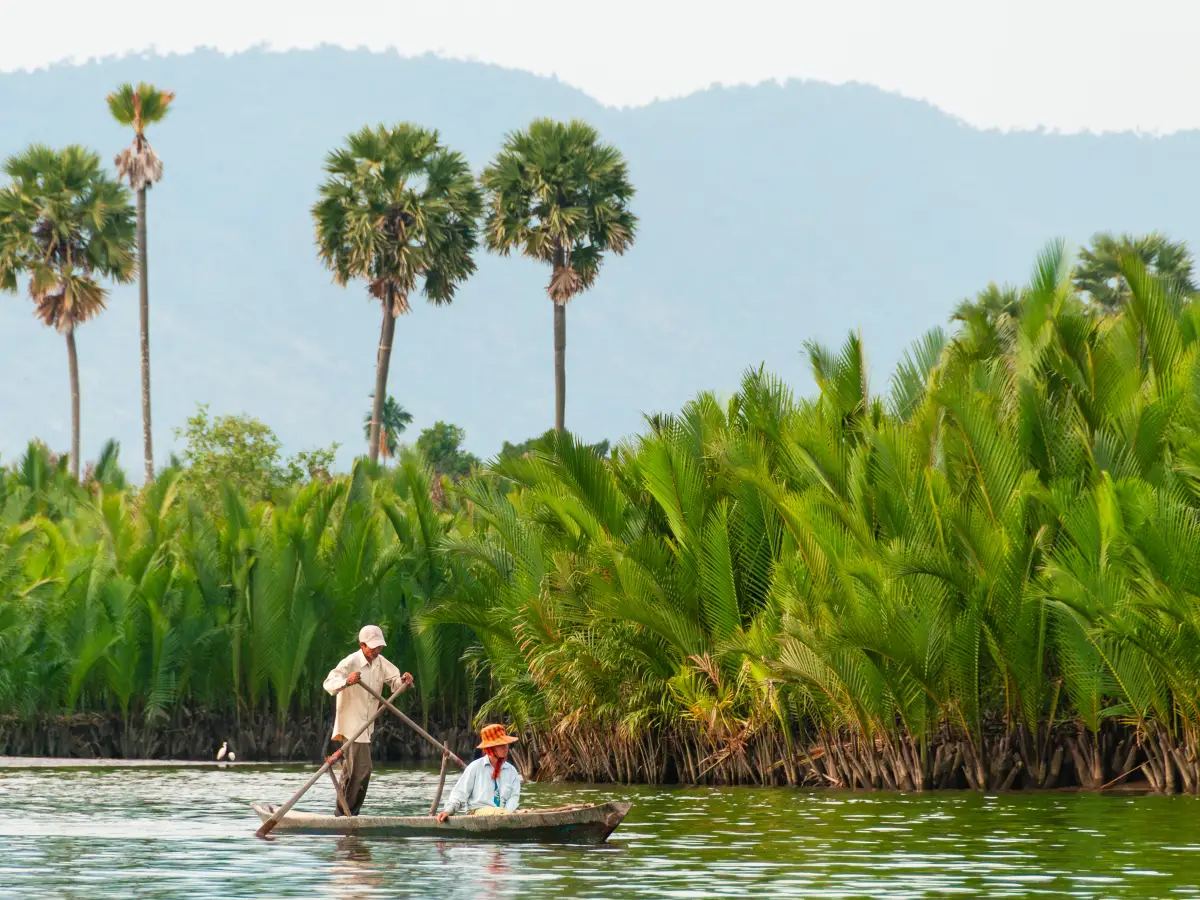

Our Programs
Explore Our Other Programs
Join us on an unforgettable journey through Southeast Asia! Learn from experts, explore amazing places, make a difference, and create lasting memories along the way.
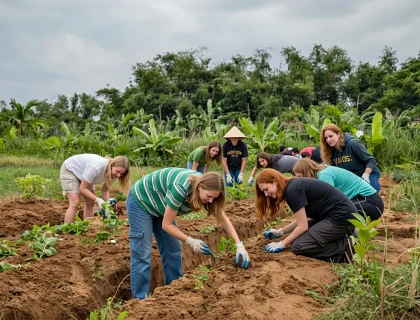
Service – Learning
Students join community-led projects in sustainability, conservation and rural infrastructure, then reflect on the impact each evening.

Faculty-led
University programs built around your syllabus, with site visits and expert sessions your faculty can teach from.
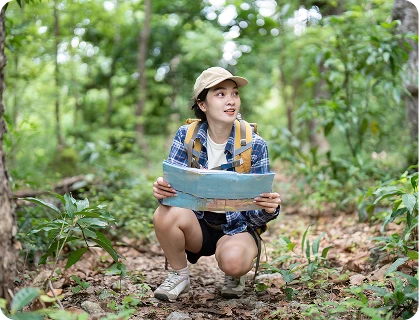
Week Without Walls
Seven action-packed days of conservation, culture and challenge that build teamwork and independence.
MBA Program
Global Business, Real-World Leadership
Company visits, industrial parks and executive briefings inside one of Asia’s fastest-growing economies.
Healthcare Program
Innovating Global Healthcare Solutions
Supervised, observational placements from national hospitals to village clinics, plus daily guided reflection.
Other Programs
Explore Our Other Programs
Join us on an unforgettable journey through Southeast Asia! Learn from experts, explore amazing places, make a difference, and create lasting memories along the way.
Service – Learning
Students join community-led projects in sustainability, conservation and rural infrastructure, then reflect on the impact each evening.
Faculty-Led
University programs built around your syllabus, with site visits and expert sessions your faculty can teach from.
Week Without Walls
Seven action-packed days of conservation, culture and challenge that build teamwork and independence.

MBA Program
Company visits, industrial parks and executive briefings inside one of Asia’s fastest-growing economies.

Healthcare Program
Supervised, observational placements from national hospitals to village clinics, plus daily guided reflection.
Client’s Testimonial
What Teachers and Students Say
Real feedback from schools and universities who have travelled with us.

Why Us
Why Schools and Universities Choose AET
Every program starts with your learning goals and ends with students who have seen, done and understood something new. Here is what sits behind it.

Curriculum First
Itineraries are mapped to your learning outcomes, not adapted from a holiday package.

Fully Customizable
Start from a proven template, then adjust length, pace, projects and budget to fit your group.

Responsible Travel
Long-term community partners, fair local spending, and projects the community asks for.

Expert Local Guides
Guides who know student groups and can explain not just what to see, but why it matters.

Insider Access
Clinics, factories, villages and conservation sites that are hard to reach without local relationships.

Safety & 24/7 Support
Vetted hotels and vehicles, first-aid trained guides, and an operations team on call around the clock.
Curriculum First
Itineraries are mapped to your learning outcomes, not adapted from a holiday package.
Fully Customizable
Start from a proven template, then adjust length, pace, projects and budget to fit your group.
Responsible Travel
Long-term community partners, fair local spending, and projects the community asks for.
Expert Local Guides
Guides who know student groups and can explain not just what to see, but why it matters.
Insider Access
Clinics, factories, villages and conservation sites that are hard to reach without local relationships.
Safety & 24/7 Support
Vetted hotels and vehicles, first-aid trained guides, and an operations team on call around the clock.
Travel Smarter with EduTravel Tips & Stories
Explore the EduTravel Blog for expert tips, cultural highlights, and inspiring stories from our adventures across Vietnam, Cambodia, and Laos.
Our Destinations
Integrate – Inspire – Innovate
Take your learning beyond the classroom with a journey through Indochina! From Vietnam’s rich history to Cambodia’s majestic temples and Laos’ tranquil beauty, this is your chance to experience Southeast Asia like never before and create memories that will last a lifetime.


Planning Guides for Educators
Explore the AET Blog for expert tips, cultural highlights, and inspiring stories from our adventures across Vietnam, Cambodia, and Laos.
-

Best Time to Visit Vietnam: A Regional Breakdown & Modern Travel Tips
When is the best time to visit Vietnam? See how the North, Central and South climates differ, which festivals to plan around, and smart tips to time your trip.
0 Comments -
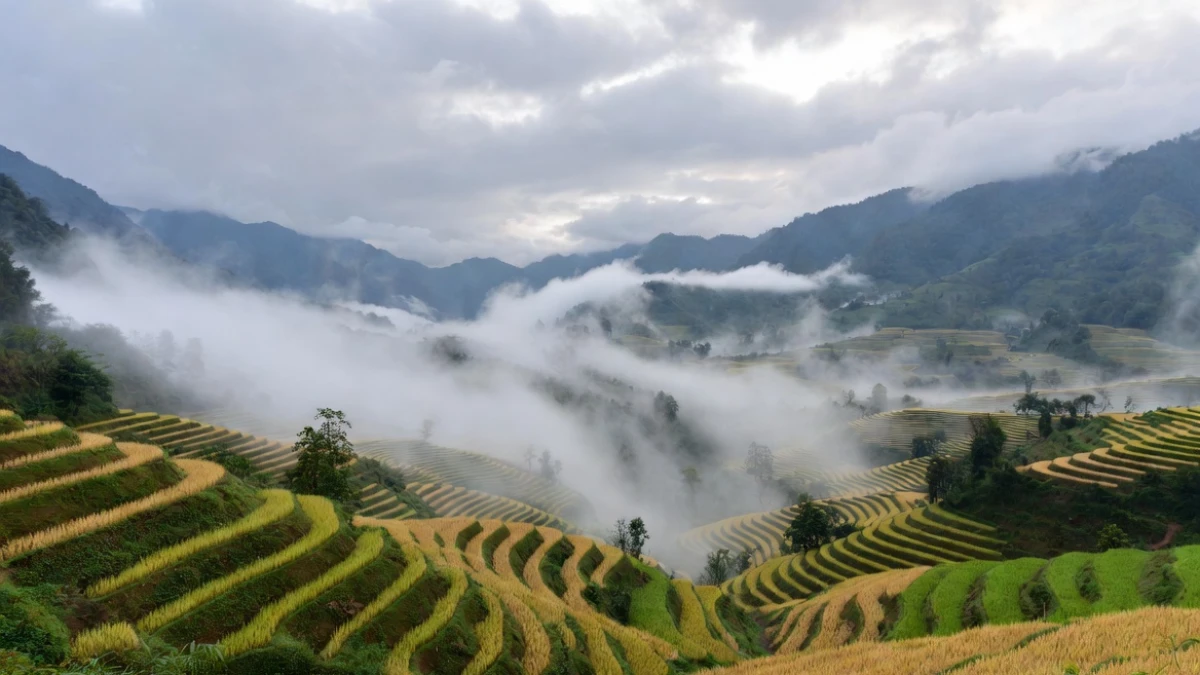
Ultimate Vietnam Educational Travel Checklist for Students In 2026
Planning a student trip to Vietnam? This checklist covers visas, timing, packing, health, etiquette and must-see learning sites for a smooth, inspiring program.
-
Prioritizing Health and Safety in Vietnam Educational Travel
Keep your group healthy and safe in Vietnam with practical tips on vaccinations, food and water, mosquitoes, traffic and service learning precautions.