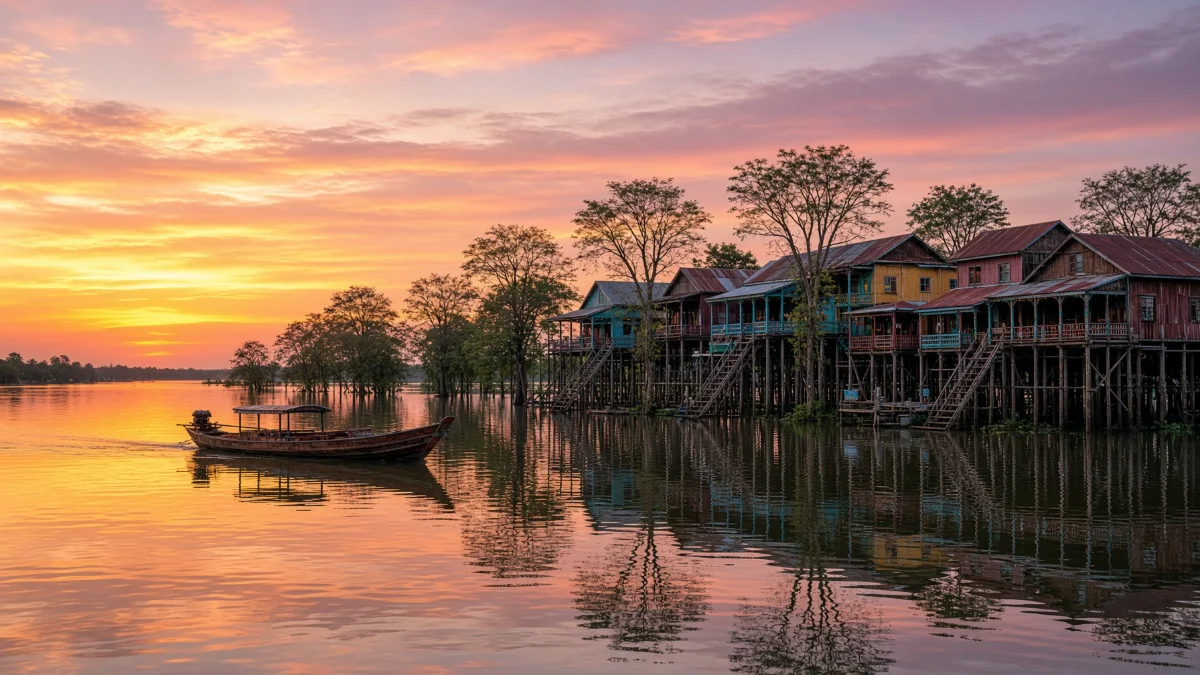
Cambodia School Trip Guide: What Students Learn at Angkor and Beyond
Cambodia School Trip Guide: What Students Learn at Angkor, Tuol Sleng and Beyond
A Cambodia school trip is one of the most rewarding learning journeys a school can offer. In a single week, students can explore one of the largest religious monuments ever built, hear how a nation rebuilt itself within living memory, and work alongside a rural community on a project that genuinely matters to the people who live there.
For teachers, Cambodia is also a practical destination. Distances are short, the culture is famously welcoming, and the country’s story connects naturally to history, art, ethics, geography and global citizenship. This guide walks you through what students learn, where to go and how to plan a program that is safe, respectful and unforgettable.
1. Why Choose Cambodia for a School Trip?
Few destinations bring so many subjects together in one place. Cambodia lets students move from ancient civilisation to modern resilience in the space of a few days, and every stop adds a new layer to their understanding of the region.
Teachers who have led groups here tend to highlight the same strengths:
- History that feels real: From the height of the Khmer Empire to the Khmer Rouge period, students meet history on the ground rather than on a page.
- World-class heritage: The Angkor Archaeological Park is a UNESCO World Heritage Site and an active conservation project, not a finished museum.
- Resilience and hope: Students see how communities, NGOs and young people are shaping Cambodia’s future.
- Warm hospitality: Cambodians are known for their kindness, which makes cultural exchange easy and genuine.
2. Siem Reap and the Temples of Angkor
Siem Reap is the gateway to Angkor and the natural starting point for most school groups. The town itself is relaxed and easy to navigate, with comfortable hotels and plenty of space for evening reflection sessions after a busy day of exploring.
2.1. Exploring the Angkor Archaeological Park
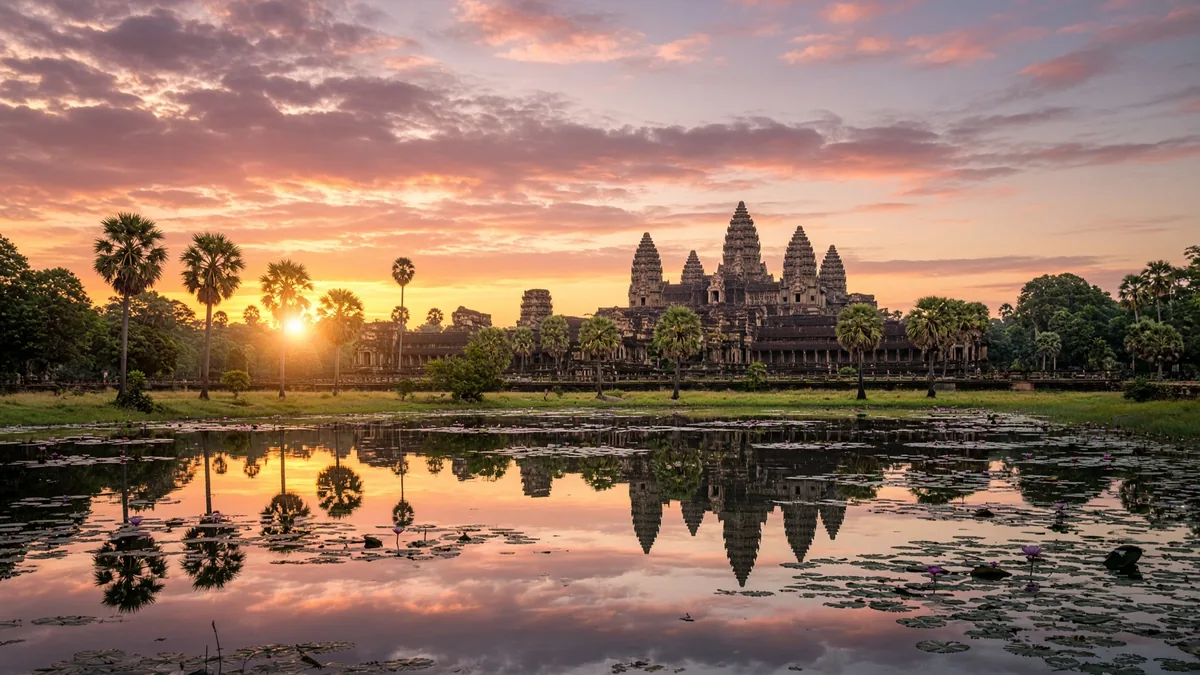
A full day in the temple complex is the highlight of almost every Cambodia program. With a knowledgeable guide, the temples become a lesson in engineering, religion, art and the rise and fall of empires.
Most itineraries focus on three sites that together tell the story of Angkor:
- Angkor Wat: The iconic temple, best explored with a guide who can explain its symbolism, layout and construction.
- Angkor Thom and the Bayon: The great walled city, famous for its giant carved stone faces.
- Ta Prohm: Ruins wrapped in tree roots, a perfect starting point for discussions about conservation.
To keep energy high in the heat, we often run the day as a photo scavenger hunt. Students explore actively, ask better questions and come away with a visual record of what they learned.
2.2. Learning Beyond the Temples
Siem Reap offers several experiences that students often remember even more vividly than the temples, because they connect history with the present day.
Depending on your goals, a program can include:
- A humanitarian demining visitor centre, where students learn how landmines are cleared and meet the trained detection rats that help do it.
- Phare, The Cambodian Circus, a production of acrobatics, music and storytelling staged by performers trained through an arts NGO.
- A classical Apsara dance performance over a group dinner, linking the dance to the carvings students saw at Angkor.
3. Phnom Penh: Understanding Modern Cambodia
The capital adds essential context to any Cambodia program. It is where students begin to understand the country’s recent past and how it shapes daily life today. Some visits here are emotionally demanding, so we always prepare students beforehand and hold a guided debrief afterwards.
A typical day in Phnom Penh can include:
- The Royal Palace and Silver Pagoda: A window into Cambodia’s monarchy and Buddhist traditions.
- The National Museum: An excellent collection of Khmer art that brings the temples of Angkor to life.
- Tuol Sleng and the Killing Fields memorial: Difficult but important sites for learning about genocide, memory and reconciliation.
- The Russian Market: A lively and practical lesson in local commerce.
For younger groups, we adapt how these sites are visited or suggest alternatives. Your learning goals and your students’ ages always come first.
4. Service Learning in Rural Cambodia
Many schools pair sightseeing with a community project, and this is often where students grow the most. Working alongside local people gives them a perspective on daily life that no tour can match, and it turns the trip into something students feel they contributed to.
On our Service Learning Trip in Cambodia, students spend several days in a village near Siem Reap. They work with local builders on a project the community has chosen, then join a Khmer cooking class, learn the traditional craft of sugar palm making and share a sunset dinner beside the rice fields.
If your school prefers conservation, our Week Without Walls programs offer two strong options:
- Kampot, where students follow the full cycle of mangrove restoration, from collecting seeds by boat to replanting seedlings.
- Mondulkiri, where students support an ethical elephant conservation project with no riding and no bathing.
5. Curriculum Links for a Cambodia School Trip
One of the biggest advantages of Cambodia is how easily it maps onto existing courses. With a little planning, the trip can support several subjects at once and give students rich material for assignments when they return.
Here are the curriculum links teachers use most often:
- History and Global Politics: Empire, colonialism, conflict and reconciliation.
- Art and Architecture: Khmer temple design, sculpture and the challenges of conservation.
- Geography: The Mekong, the Tonle Sap and rural livelihoods.
- Theory of Knowledge and Ethics: How memorials tell stories, and whose voices they include.
- CAS and Service: Community projects with real, visible outcomes.
6. Practical Planning Tips
A little preparation goes a long way in Cambodia. The points below cover the questions teachers ask us most often during the early planning stage.
Keep these in mind as you shape your itinerary:
- Best season: The cooler dry months, roughly November to February, are the most comfortable for touring temples.
- Trip length: Seven days covers Siem Reap and a community project. Add Phnom Penh for a fuller picture of modern Cambodia.
- Entry rules: Visa requirements depend on nationality and change from time to time, so check current rules before booking flights.
- Dress code: Shoulders and knees should be covered at temples and at the Royal Palace.
- Pacing: Build in slower afternoons, because both the heat and the emotional site visits can be tiring.
7. Frequently Asked Questions
7.1. How long should a Cambodia school trip be?
Seven days is ideal for Siem Reap and a community project. If you want to include Phnom Penh and its history sites, plan for nine to ten days so the pace stays comfortable and students have time to reflect.
7.2. Is Cambodia suitable for younger students?
Yes, with the right itinerary. Angkor, craft workshops, cooking classes and conservation projects all work well for younger groups. We adapt or replace emotionally difficult sites based on age and your school’s guidance.
7.3. When is the best time for a school trip to Cambodia?
The cooler dry season, roughly November to February, is the most comfortable. Trips run year-round with good planning, including shaded breaks and slower afternoons during the hotter months.
7.4. Can a Cambodia trip include service learning?
Absolutely. Groups can join community construction projects near Siem Reap, mangrove restoration in Kampot or ethical elephant conservation in Mondulkiri, all guided by long-term local partners.
8. Plan Your Cambodia School Trip With AET
Every program we design starts with your learning goals. Our team handles the logistics, local partnerships and safety planning, so you can focus on your students and the experience itself.
Explore our Cambodia destination guide for visas, climate and cultural tips, or tell us about your group and we will send a tailored itinerary.
Take your learning beyond the classroom with a journey through Indochina! From Vietnam’s rich history to Cambodia’s majestic temples and Laos’ tranquil beauty, this is your chance to experience Southeast Asia like never before and create memories that will last a lifetime.