Ethical Service Learning Trips: 7 Questions to Ask Before You Book
Ethical Service Learning Trips: 7 Questions to Ask Before You Book
Service learning can be the most meaningful part of a school trip. When it is done well, students build real skills, form genuine connections and leave behind something the community actually needs. When it is done poorly, the project can be designed more for photographs than for the people it claims to help.
The good news is that a handful of thoughtful questions will help you choose ethical service learning trips that benefit everyone involved. Below are the seven questions we recommend every teacher asks a provider before signing up.
1. Who Chose the Project?
The strongest projects begin with a need the community identified for itself, not a gap a tour operator wanted to fill. When local people lead the decision, the work is far more likely to be useful and to continue after your group leaves.
When you speak to a provider, listen for the following:
- How the community was involved in choosing and designing the work.
- Whether the provider works with long-term local partners rather than one-off contacts.
- Whether projects stay consistent over time instead of changing each season to suit visiting groups.
2. What Happens After Your Group Leaves?
A good project is part of something bigger than a single visit. The work your students do should connect to an ongoing local program, so that it keeps delivering value long after they fly home.
It is worth asking:
- Who will maintain the classroom, garden or mangrove nursery once the group has gone?
- How does this week’s work fit into the community’s longer-term plans?
- Will your school receive an update on the project’s progress?
3. Are Students Working With Locals, Not Instead of Them?
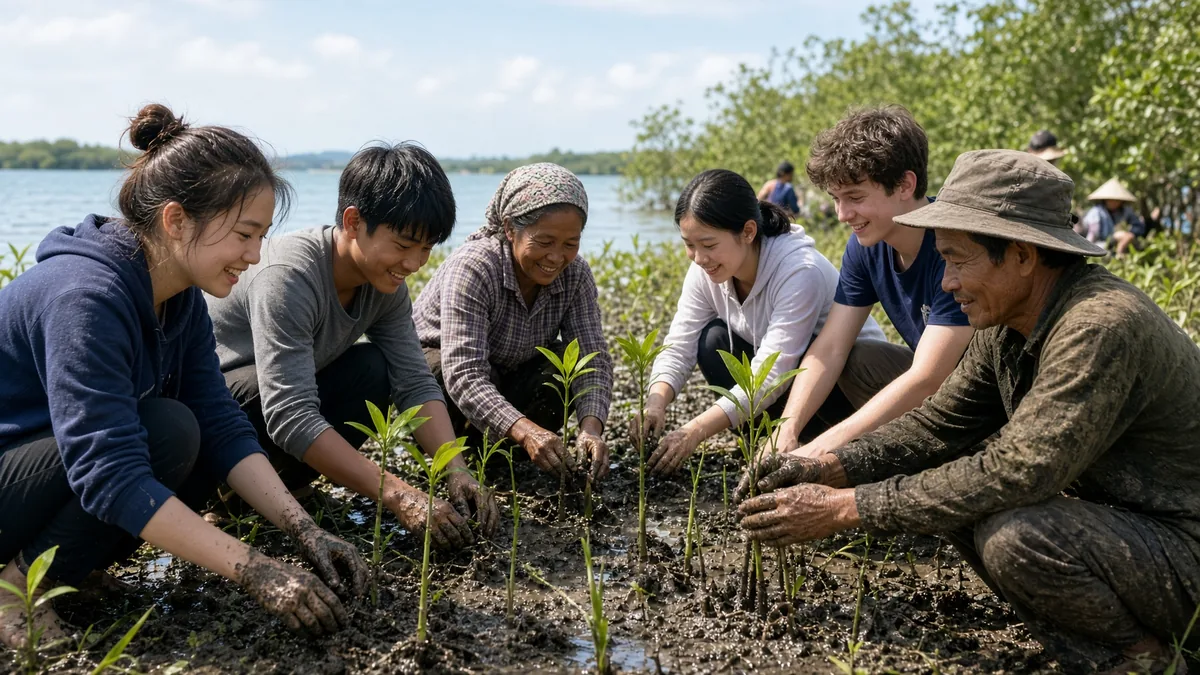
Students should work side by side with local tradespeople and community teams. This keeps skilled and paid work in local hands, and it gives students the chance to learn from people who genuinely understand the materials, the environment and the culture. It also turns the project into a two-way exchange rather than a one-way act of help.
4. Does the Program Avoid Residential Care Settings?
Responsible operators do not place students in orphanages or residential care homes. Short-term visits can harm vulnerable children, and child protection organisations widely advise against them.
Instead, look for projects that take place in settings where students can contribute without putting anyone at risk:
- Schools and community learning centres, with clear safeguarding rules.
- Farms, gardens and community spaces.
- Conservation sites such as mangrove nurseries or forest restoration areas.
5. Is Reflection Built Into Every Day?
Service only becomes learning when students have time to think about what they saw, what they did and why it mattered. Without reflection, even a well-designed project can feel like a set of tasks rather than a learning experience.
Look for a program that includes:
- Pre-trip briefings on the community and its wider context.
- Daily debriefs led by trained facilitators.
- A final reflection session that connects the experience to life back home.
6. Does the Work Match Your Students’ Skills and Ages?
Teenagers are not professional builders, and that is perfectly fine. What matters is that the project is realistic, safe and properly supervised, so that students can contribute meaningfully without being put in difficult situations.
Good providers will be able to explain:
- How safety briefings and tool training are delivered before work begins.
- How tasks are matched to the group’s age, fitness and experience.
- Who supervises students on site, and how many supervisors are present.
7. How Is Money Spent in the Community?
Ask how the program supports the local economy beyond the project itself. Positive signs include local guides, family-run guesthouses, meals cooked by the community and transparent project contributions. When spending stays local, the benefits of your visit reach far more people than the project alone.
8. What Ethical Service Learning Looks Like in Practice
These principles are easier to picture with real examples. Here is how they show up on some of our programs:
- Hoi An, Vietnam: Students join a local waste solution network and land regeneration work, then reflect together on the final afternoon.
- Kampot, Cambodia: Groups follow the full mangrove cycle, from collecting seeds by boat to replanting seedlings.
- Mai Chau, Vietnam: Students begin with a needs-analysis walk through the village before any work starts.
9. Frequently Asked Questions
9.1. What is ethical service learning?
Ethical service learning puts the community’s needs first. Projects are chosen by local partners, supervised by local experts and paired with reflection, so that students understand the impact of their work.
9.2. Why should students avoid orphanage volunteering?
Short-term visits to residential care settings can harm vulnerable children, and child protection organisations widely advise against them. Schools, farms and conservation projects are much better alternatives.
9.3. How long should a service learning project last?
Two to four days of project work within a one-week trip is a good balance. It gives students time to contribute and reflect without disrupting the community’s routine.
9.4. Do students need special skills?
No. Local supervisors provide safety briefings and training, and tasks are matched to the group’s age and ability.
10. Ready to Plan a Responsible Trip?
At Asia Education Travel, every service project is co-designed with long-term community partners and built around daily reflection. We are always happy to talk through how a project works before you commit.
Learn more about our Service-Learning programs or tell us about your group.
Take your learning beyond the classroom with a journey through Indochina! From Vietnam’s rich history to Cambodia’s majestic temples and Laos’ tranquil beauty, this is your chance to experience Southeast Asia like never before and create memories that will last a lifetime.