School Trip Risk Assessment for Vietnam and Cambodia: A Practical Template
School Trip Risk Assessment for Vietnam and Cambodia: A Practical Template
A clear school trip risk assessment is the key to getting your trip approved, and to feeling confident once your group lands. It shows school leaders and families that the risks have been thought through and that sensible controls are in place.
It does not need to be complicated. Use this practical template as a starting point for trips to Vietnam and Cambodia, then adapt it to your school’s own policy, your itinerary and the age of your students.
1. How to Structure Your Risk Assessment
Most schools use a simple table, with one row for each activity or hazard. Keeping the same structure throughout makes the document easy to review and update as the itinerary develops.
For each hazard, record:
- The hazard: What could cause harm?
- Who is at risk: Students, staff or both.
- Likelihood and severity: Rate each as low, medium or high.
- Control measures: What you will do to reduce the risk.
- Residual risk: The risk level once controls are in place.
2. Transport
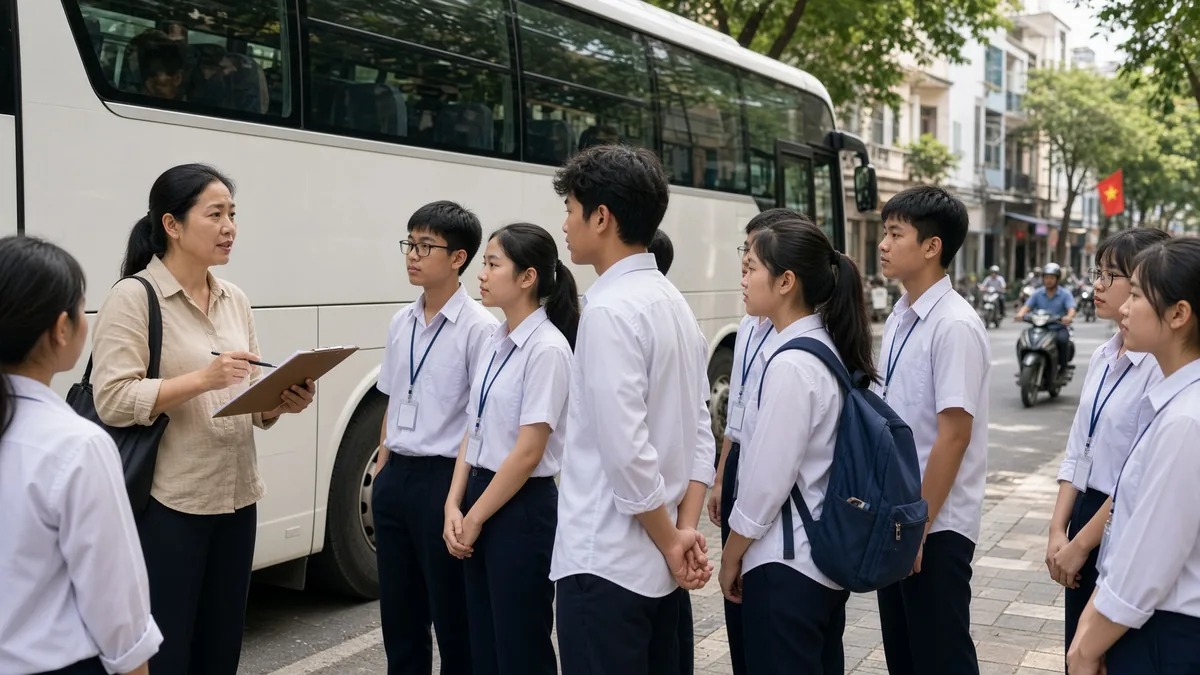
Road traffic is usually the first concern for teachers travelling to Vietnam and Cambodia, particularly the busy motorbike traffic in larger cities. Clear rules and reputable transport partners reduce this risk considerably.
Typical control measures include:
- Licensed, experienced drivers who are familiar with student groups.
- Seatbelts checked before every journey.
- Guides leading all road crossings.
- No independent motorbike travel for students.
3. Health, Food and Water
Most health issues on school trips are minor, but planning for them reassures everyone and keeps the program running smoothly.
3.1. Food and Water
Upset stomachs are the most common problem, and simple habits prevent most cases.
Recommended controls are:
- Bottled or sealed water only.
- Freshly cooked meals from trusted restaurants and partners.
- Regular handwashing and hand sanitiser.
- Dietary needs and allergies shared with the operator in advance.
3.2. Mosquito-Borne Illness
Mosquitoes are present across the region, particularly in rural areas and during the rainy season. Students should use repellent, wear long sleeves at dawn and dusk, and follow the advice of a travel clinic before departure.
4. Heat and Sun
Heat exhaustion is a real risk during outdoor activities, especially for students who are not used to tropical conditions. A few simple routines make a big difference.
Build these controls into the itinerary:
- Water breaks at least every hour.
- Shade and rest during the hottest part of the day.
- Hats and sunscreen for every student.
- Staff trained to spot the early signs of heat exhaustion.
5. Activities and Service Projects
Hands-on activities are often the highlight of a trip, so they deserve careful planning. Each activity should have its own row in your risk assessment.
Common examples and their controls:
- Construction or gardening: Safety briefings and tool training, gloves and closed shoes, and local supervisors on site.
- Kayaking or rafting: Life jackets worn at all times, trained water safety staff, and swimming ability checked in advance.
6. Accommodation and Supervision
Clear accommodation and supervision arrangements are central to any risk assessment, and they are often the first thing parents ask about.
Good practice includes:
- Vetted properties that meet safety standards.
- Students rooming together in single-gender groups, never with members of the public.
- Teachers in private rooms close to students.
- Agreed curfews and a buddy system at all times.
7. Medical Emergencies and Emergency Numbers
Even with excellent planning, it is important to know exactly what will happen if a student needs medical help. Your risk assessment should set this out clearly.
Include the following arrangements:
- First-aid trained guides carrying professional medical kits.
- The nearest clinic and hospital identified for each location.
- Copies of medical forms, allergy details and insurance documents carried by staff.
- A 24/7 operations contact for the whole trip.
It is also good practice to list local emergency numbers. In Vietnam these are Police 113, Fire 114 and Ambulance 115. In Cambodia they are Police 117, Fire 118 and Ambulance 119. Add your embassy contact details for each country, and always confirm all numbers shortly before departure.
8. Changing Conditions
Finally, your risk assessment should explain how the group will respond if circumstances change before or during the trip.
Make sure you:
- Monitor your government’s travel advice before and during the trip.
- Agree in advance how itinerary changes will be handled.
- Keep parents informed through a clear communication plan.
9. Frequently Asked Questions
9.1. Do schools need a risk assessment for overseas trips?
Most schools require one before a trip is approved. Check your school or district policy for the exact format.
9.2. What are the main risks on a trip to Vietnam or Cambodia?
Common areas to plan for include road traffic, food and water hygiene, heat, mosquito bites and activity-specific risks such as water sports.
9.3. Can our travel provider help with the risk assessment?
Yes. We share safety information for every program to support your paperwork, including accommodation, transport and activity details.
9.4. How often should a risk assessment be reviewed?
Review it when you finalise the itinerary, again shortly before departure, and whenever travel advice changes.
10. Let Us Support Your Paperwork
We share detailed safety information for every program to help you complete your school’s risk assessment with confidence.
Read our guide to health and safety in Vietnam educational travel, or contact us for program-specific details.
Take your learning beyond the classroom with a journey through Indochina! From Vietnam’s rich history to Cambodia’s majestic temples and Laos’ tranquil beauty, this is your chance to experience Southeast Asia like never before and create memories that will last a lifetime.