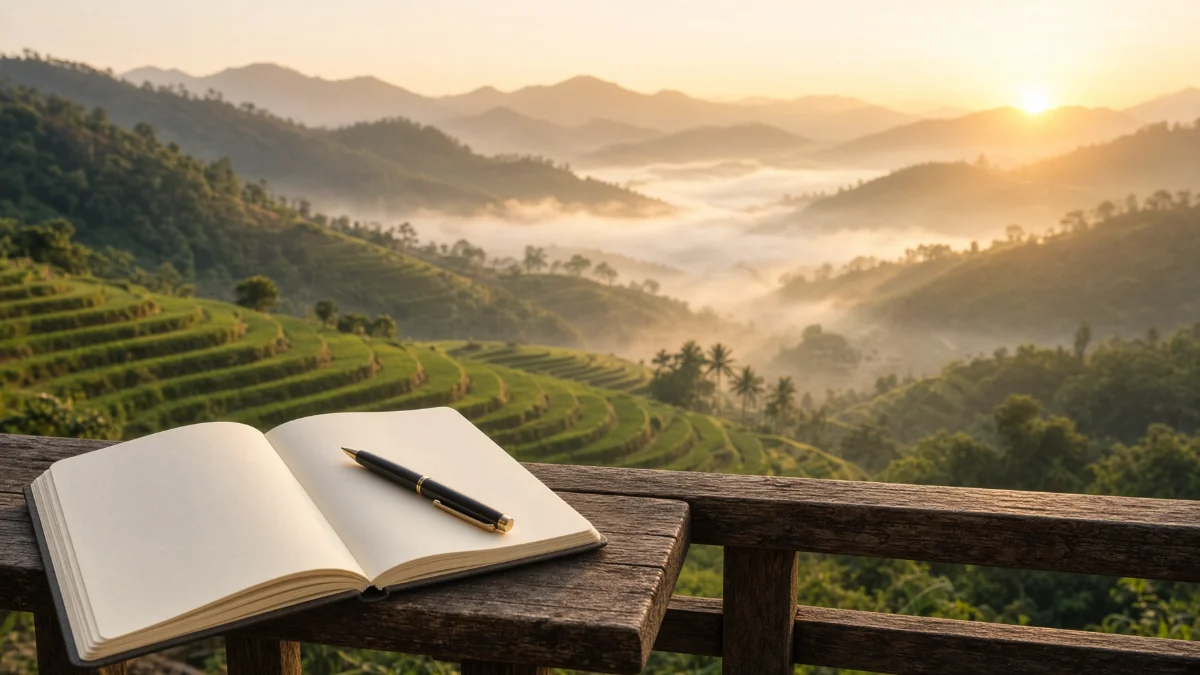
Student Reflection on Educational Trips: Journaling Prompts That Turn Travel Into Learning
Student Reflection on Educational Trips: Journaling Prompts That Turn Travel Into Learning
Every educational trip is packed with moments that could change how a student sees the world: a conversation with a host family, a quiet morning at a temple, the first time they navigate a busy market on their own. But experiences alone do not guarantee learning. Reflection is what turns a great trip into lasting understanding.
In this guide, we share simple frameworks, ready-to-use journaling prompts and practical tips that help students process what they see, feel and learn before, during and after an educational journey in Southeast Asia.
1. Why Reflection Matters on Educational Trips
Educational researchers have long described learning from experience as a cycle: we do something, reflect on it, draw conclusions and then try again with new understanding. Without the reflection step, many insights fade within weeks of returning home.
- Deeper understanding: Writing about an experience helps students connect it to classroom concepts and their own values.
- Emotional processing: Visits to war museums, rural communities or sacred sites can bring up strong feelings. Reflection gives students a safe way to work through them.
- Evidence of learning: Journals provide valuable material for assessments, IB CAS portfolios, presentations and university applications.
- Lasting memories: Years later, students often say their journal is the most treasured souvenir they brought home.
2. A Simple Framework: What? So What? Now What?
One of the easiest reflection models to use with students of any age is a three-step question sequence.
- What? Describe what happened. Where were you, who did you meet, what did you see, hear, smell and taste?
- So what? Why does it matter? What did you learn, what surprised you and how does it connect to what you already knew?
- Now what? How will this change your thinking or actions? What do you want to learn more about?
Pro tip: Print the three questions on the inside cover of each student’s journal. Over time, they begin to reflect in this structure naturally, even in conversation.
3. Journaling Prompts Before the Trip
Pre-trip reflection sets expectations, surfaces assumptions and gives students something to compare against later.
- What three words come to mind when you think of Vietnam, Cambodia or Laos? Where do those ideas come from?
- What are you most excited about? What are you most nervous about?
- What is one question you hope to answer during this trip?
- What do you think daily life is like for a teenager in the places we will visit?
- What personal goal do you want to set, such as trying new food, speaking to locals or stepping out of your comfort zone?
4. Journaling Prompts During the Trip
4.1. Daily Prompts
- What was the highlight of today, and why?
- What challenged you today? How did you respond?
- Describe one person you met. What did you learn from them?
- What did you notice today that you would never notice at home?
- What is one thing you are grateful for today?
4.2. Prompts for Specific Experiences
- Homestays: What did your host family’s daily routine teach you about their values? What surprised you about their home?
- Historical sites: How did this place make you feel? Whose stories are told here, and whose might be missing?
- Nature and landscapes: Sketch the view in front of you. What natural processes shaped it, and how are people changing it now?
- Markets and businesses: How do people here make a living? What did you notice about prices, bargaining or teamwork?
- Service learning: Who benefits from this project, and how do we know? What did the community teach you?
- Temples and ceremonies: What rituals did you observe? How do they compare with traditions in your own culture or community?
4.3. Creative Formats
Not every student loves writing, and that is perfectly fine. Offer a range of formats so everyone can reflect in a way that suits them.
- Sketches and maps: Drawing a market, a view or a route encourages close observation.
- Photo journals: One photo per day with a caption explaining why it matters.
- Voice notes: Short audio reflections recorded at the end of each day.
- Letters: A letter to their future self, a family member or a person they met.
- Poems and short stories: Great for students who enjoy creative writing.
5. Group Reflection Activities
Individual journaling works best when combined with shared reflection. These quick activities fit easily into evening debriefs.
- Rose, thorn, bud: Each student shares a highlight, a challenge and something they are looking forward to.
- One word circle: Everyone describes the day in a single word, then a few volunteers explain their choice.
- Gallery walk: Students display a sketch, photo or quote and walk around to read each other’s work.
- Question jar: Students drop anonymous questions into a jar for the group or guide to answer.
6. After the Trip: Making Learning Stick
- What is the most important thing you learned, and how will it change what you do?
- Look back at your pre-trip assumptions. Which were accurate, and which changed?
- How would you explain this trip to someone who has never left your country?
- What is one action you will take in the next month because of this experience?
Post-trip presentations, exhibitions, blog posts or short films give students an audience for their reflections and help share the impact with families and the wider school community. If your trip supports IB goals, our guide on linking travel to IB CAS explains how reflection fits into CAS evidence.
7. Tips for Teachers and Trip Leaders
- Protect the time: Schedule 15 to 20 minutes of reflection every day, rather than leaving it to “free time”.
- Model it: Share your own reflections. Students take it more seriously when adults participate too.
- Respect privacy: Make clear which entries are private and which may be shared or assessed.
- Keep it light: Short, regular reflections beat long, exhausting assignments.
- Use local guides: Guides can add context to students’ questions and turn reflection sessions into rich discussions.
8. Conclusion: The Souvenir That Lasts
A thoughtful reflection practice transforms an exciting trip into a meaningful learning journey. With the right prompts and a little structure, students return home not only with photos, but with clearer thinking, deeper empathy and a stronger sense of who they want to be.
At Asia Education Travel, guided reflection is built into every program, from Service Learning to faculty-led journeys, and we can provide custom journals for your group. Talk to our team about building reflection into your next trip.
Take your learning beyond the classroom with a journey through Indochina! From Vietnam’s rich history to Cambodia’s majestic temples and Laos’ tranquil beauty, this is your chance to experience Southeast Asia like never before and create memories that will last a lifetime.