Hoi An and Hue for School Groups: A Living Lesson in Heritage and Conservation
Hoi An and Hue for School Groups: A Living Lesson in Heritage and Conservation
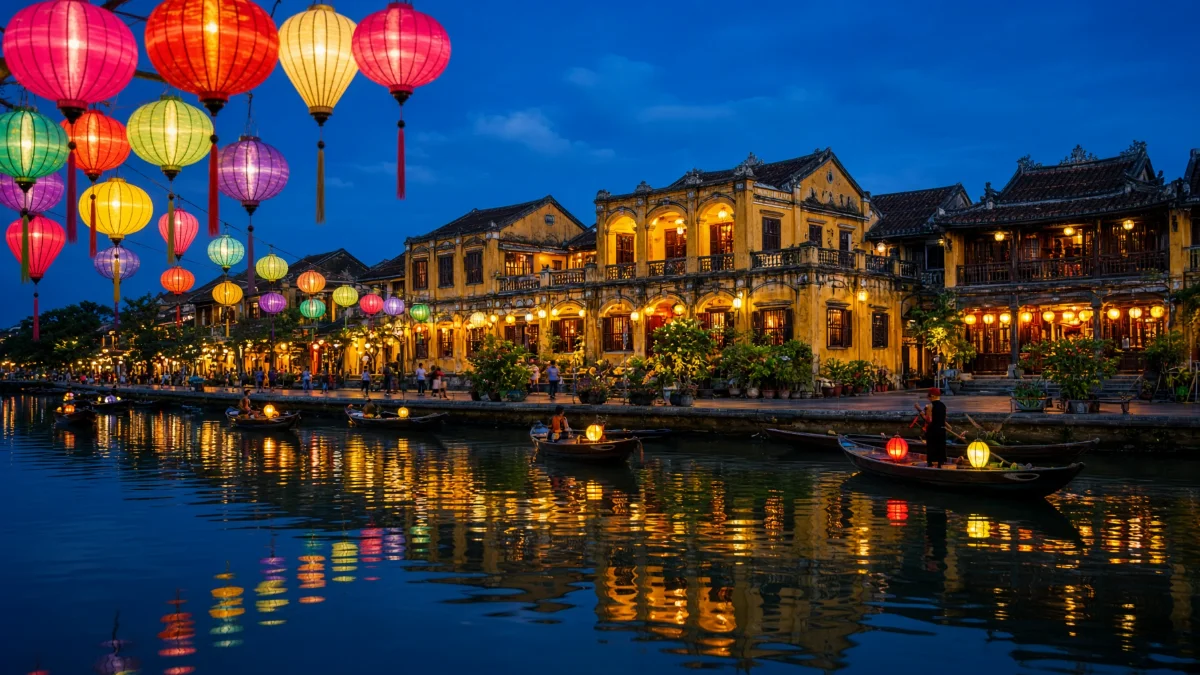
Central Vietnam holds two of the country’s most treasured heritage destinations just a few hours apart. Hoi An enchants with lantern-lit streets and centuries-old merchant houses, while Hue impresses with the grand citadel, royal tombs and pagodas of Vietnam’s last imperial dynasty. Together, they create a living textbook of history, architecture, trade and conservation.
In this guide, we explore what students learn in Hoi An and Hue, the activities that bring heritage to life, and practical tips for building a smooth central Vietnam program.
1. Two Cities, Two Stories
- Hoi An: Between the 15th and 19th centuries, Hoi An was a busy international trading port where Vietnamese, Chinese, Japanese and European merchants met. Its remarkably preserved Ancient Town was recognized as a UNESCO World Heritage Site in 1999.
- Hue: Hue served as the capital of the Nguyen dynasty from 1802 to 1945. The Complex of Hue Monuments, including the Imperial City, royal tombs and temples along the Perfume River, became Vietnam’s first UNESCO World Heritage Site in 1993.
- The journey between them: The drive or train ride over the Hai Van Pass, with sweeping views of mountains and sea, is a highlight in itself and a great geography lesson.
2. What Students Learn
2.1. History and Social Studies
- Dynasties and power: In Hue’s Imperial City, students learn how the Nguyen emperors ruled, how the court was organized and how colonial rule and war reshaped the country.
- Global trade networks: Hoi An’s assembly halls, merchant houses and the famous Japanese Covered Bridge show how trade connected Asia and Europe long before modern globalization.
- Conflict and recovery: Parts of Hue were heavily damaged during the war. Ongoing restoration offers a thoughtful way to discuss loss, memory and rebuilding.
2.2. Architecture and the Arts
- Blended styles: Hoi An’s buildings combine Vietnamese, Chinese and Japanese influences, a perfect lesson in how cultures borrow and adapt.
- Feng shui and symbolism: Hue’s citadel and tombs were designed in harmony with rivers, hills and cosmic symbolism, which fascinates students of design and philosophy.
- Royal court music: Nha Nhac, the court music of Hue, is recognized by UNESCO as Intangible Cultural Heritage and can sometimes be experienced in live performance.
2.3. Heritage Conservation
- Protecting the past: How do you preserve wooden buildings in a humid, flood-prone town while thousands of visitors walk through every day? Hoi An makes this question very real.
- Tourism balance: Students can investigate how ticketing, pedestrian zones and building rules help protect heritage, and where tensions remain.
- Climate risk: Seasonal flooding in Hoi An and Hue links heritage protection to climate adaptation.
Pro tip: Run a “heritage detective” challenge in Hoi An. Give each team a list of architectural features to find, such as carved roof ends, door eyes (mat cua) and Chinese characters on signboards, and ask them to explain each one’s meaning back to the group.
3. Hands-On Heritage Activities
- Lantern-making workshop: Students build their own silk lantern while learning about the craft’s history in Hoi An. A beautiful souvenir with a story behind it.
- Craft village visits: Thanh Ha pottery village and Kim Bong carpentry village show traditional skills that helped build the region.
- Organic farm experience: At Tra Que vegetable village, groups learn traditional growing methods and cook with fresh herbs.
- Cycling the countryside: Flat paths between rice fields and villages around Hoi An are ideal for safe, guided cycling.
- Imperial City exploration: A guided walk through Hue’s citadel, followed by a sketching or photography task, helps students absorb the scale and symbolism.
- Royal tombs and Thien Mu Pagoda: Visiting tombs such as Tu Duc, Minh Mang or Khai Dinh, and the riverside Thien Mu Pagoda, shows how architecture expresses philosophy and personality.
- Day trip to My Son: The ruins of the Cham temple complex near Hoi An, also a UNESCO site, introduce the Champa kingdom and a very different chapter of Vietnam’s history.
4. Curriculum Ideas
- History: Create a timeline that connects Champa, the trading era of Hoi An, the Nguyen dynasty, French colonial rule and modern Vietnam.
- Economics: Compare Hoi An’s historic trade with today’s tourism economy. Who benefits, and how?
- Visual arts and design: Sketch building facades, study color palettes and design a lantern or textile pattern inspired by the trip.
- Language and literature: Write travel narratives, poems or interviews with craftspeople.
- Global citizenship: Debate how heritage should be protected and who should decide.
Looking for more ways to connect travel to curriculum goals? Our guide on linking travel to the curriculum has practical frameworks you can adapt.
5. Planning Tips for Central Vietnam
5.1. When to Go
February to May is usually the most comfortable period, with pleasant temperatures and less rain. June to August is hot but sunny. The heaviest rains and flood risks typically fall between September and December, so programs at that time need flexible plans and indoor backup activities.
5.2. Getting Around
- Base cities: Many groups fly into Da Nang, stay in Hoi An for two to three nights, then travel to Hue for one to two nights.
- Walking zones: Hoi An’s Ancient Town is pedestrian-friendly at set times, which makes it easy and safe to explore on foot.
- Heat management: Schedule big outdoor sites, like the Imperial City, for early morning and save afternoons for workshops or rest.
5.3. Respectful Visiting
- Temple dress code: Shoulders and knees covered at pagodas, temples and royal sites.
- Lantern evenings: The Ancient Town gets busy after dark. Set clear meeting points and use buddy pairs.
- Support makers: Buy crafts directly from workshops whenever possible.
6. Conclusion: Heritage You Can Walk Through
Hoi An and Hue let students step inside history rather than read about it. They learn how trade shaped cultures, how emperors expressed power and how communities fight to protect the past for future generations. And, of course, they leave with glowing lantern-lit memories.
Asia Education Travel designs central Vietnam programs that combine both cities with hands-on workshops and expert guides. Explore our Vietnam destination page or contact us to build a heritage-focused itinerary for your students.
Take your learning beyond the classroom with a journey through Indochina! From Vietnam’s rich history to Cambodia’s majestic temples and Laos’ tranquil beauty, this is your chance to experience Southeast Asia like never before and create memories that will last a lifetime.